
Beauty Blog
Diamond Certification: What Your Stone Deserves

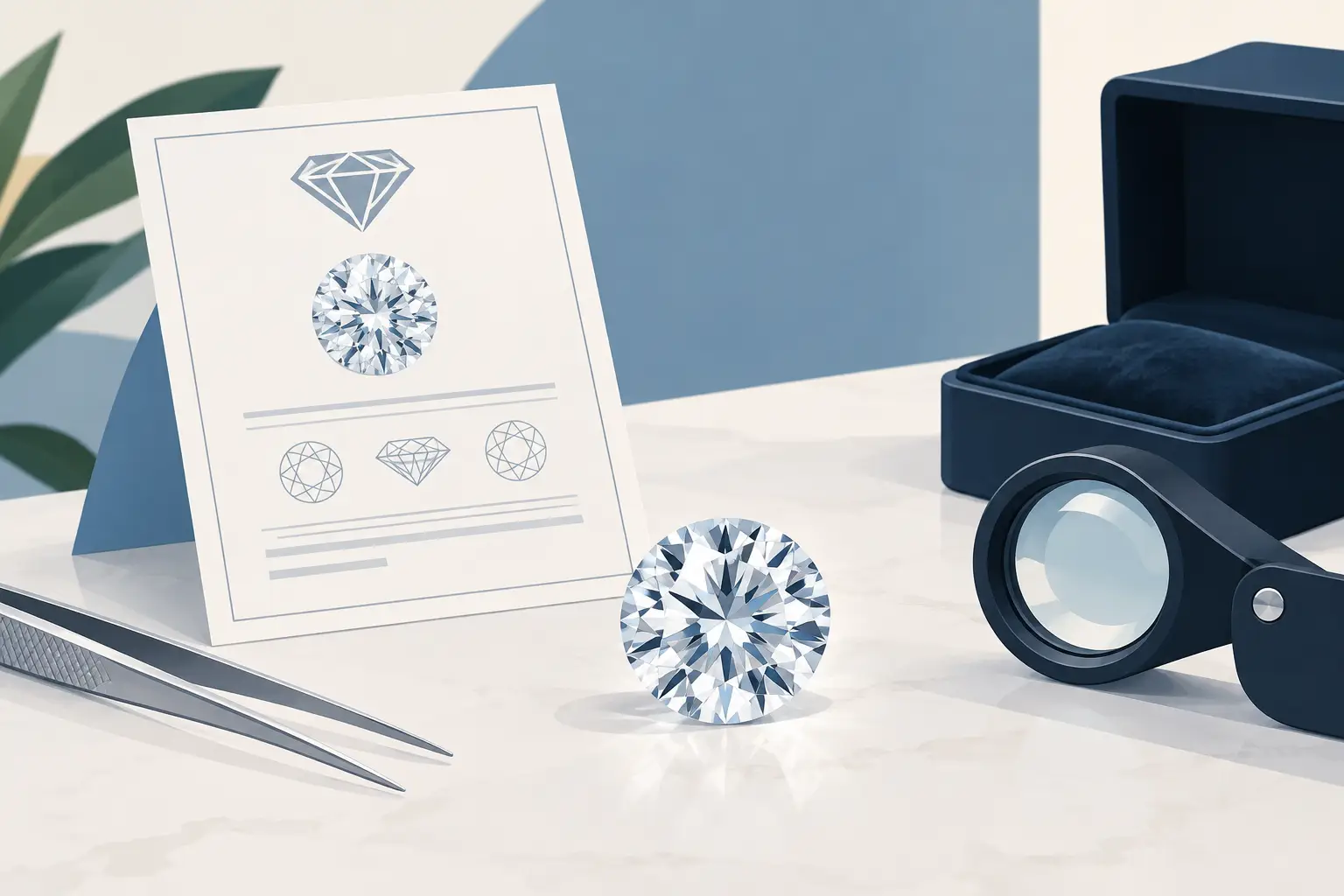
A diamond should make her pause before it makes its way onto her hand. Its light, its presence, the feeling that this is the piece she will remember – all of that matters. Diamond certification brings a second kind of confidence to the moment: the assurance that the stone behind the sparkle has been professionally examined and clearly described.
For an engagement ring, anniversary gift, or personal treasure, a grading report turns a beautiful promise into an informed purchase. It helps you understand what you are choosing, compare diamonds fairly, and feel certain that the value matches the emotion.
What Diamond Certification Really Means
The phrase diamond certification is used widely, but most buyers are actually receiving a diamond grading report. A respected independent gemological laboratory examines a loose diamond and records its measurable characteristics. The report typically includes the stone’s shape, carat weight, color, clarity, cut assessment, proportions, polish, symmetry, fluorescence, and identifying report number.
Think of it as the diamond’s own profile. It does not tell you whether the diamond feels romantic, whether it will suit her style, or whether the setting is beautifully made. Those are personal and design decisions. What it does provide is an impartial description of the stone itself.
That independence matters. A seller’s description may be helpful, but a laboratory report gives you a consistent reference point when you are comparing one diamond with another. Two stones can look similar in a display case yet differ meaningfully in cut quality, clarity, or color once their reports are placed side by side.
Why a Report Matters for a Diamond You Love
A certified diamond offers clarity before the commitment. When you know the details behind the stone, you can choose with both your heart and your eyes open.
The report confirms whether a diamond is natural or laboratory-grown when that information is part of the grading documentation. This distinction is essential because both can be beautiful, but they have different origin stories, market positioning, and resale considerations. A laboratory-grown diamond can offer impressive size and brilliance for a given budget, while a natural diamond appeals to those who want a rare gem formed over time beneath the earth. Neither choice is automatically more meaningful. The right one depends on what the wearer values.
Certification also helps protect against vague descriptions. A diamond labeled simply as “high quality” leaves too much to interpretation. A report gives specifics. If a stone is graded G color, VS2 clarity, and Excellent cut by a recognized lab, you have details that can be evaluated and compared rather than a promise based only on presentation.
For jewelry intended to mark a life-changing occasion, this knowledge can feel especially reassuring. The ring is still about love. The report simply lets the beauty be supported by facts.
The 4Cs, With Brilliance at the Center
Most diamond reports are built around the 4Cs: cut, color, clarity, and carat weight. Understanding them can make shopping feel less intimidating and far more exciting.
Cut
Cut is often the most influential factor in a diamond’s visible beauty. It is not the same as shape. Round, oval, emerald, pear, and cushion are shapes. Cut refers to how the diamond’s facets, angles, and proportions interact with light.
A well-cut diamond returns light beautifully, creating the bright white flashes, colorful fire, and lively sparkle people notice from across the room. A larger diamond with weak proportions may look less radiant than a smaller stone with exceptional cut. If your goal is that unforgettable glow every time she moves her hand, prioritize cut early in the selection process.
Color
For traditional white diamonds, color grading generally measures the absence of noticeable color. The scale commonly moves from D, which is colorless, downward toward warmer tones. Diamonds in the near-colorless range can look beautifully bright, particularly once set in yellow gold or rose gold.
The best color grade depends on the setting and the look you love. A cool, icy platinum setting may call for a higher color grade, while warm gold can make a slightly warmer diamond appear intentional and luminous. Fancy-color diamonds, such as vivid yellow or pink stones, are evaluated differently because their color is the feature to celebrate.
Clarity
Clarity refers to internal characteristics, called inclusions, and external features, called blemishes. Nearly every natural diamond has some identifying characteristics. The question is not whether they exist, but whether they affect beauty, durability, or transparency.
Many diamonds can be eye-clean, meaning inclusions are not visible without magnification, even if the report is not at the very top of the clarity scale. This is where a thoughtful choice can create excellent value. Paying for a flawless grade may be meaningful to some collectors, while others would rather direct more of the budget toward cut, carat weight, or an exquisite setting.
Carat Weight
Carat measures weight, not visual size alone. Two diamonds with the same carat weight can face up differently depending on their shape and proportions. Oval, pear, marquise, and emerald-cut diamonds can appear larger than round diamonds of the same weight because of their surface area.
A diamond should never be chosen by carat alone. The most captivating stone is one that feels balanced: generous in presence, bright in motion, and perfectly proportioned for the hand and setting.
Which Diamond Certification Laboratories Are Trusted?
Not every report carries the same weight. The laboratory matters because grading standards and terminology can vary. For natural diamonds, reports from the Gemological Institute of America, commonly known as GIA, are widely respected for consistency and strict grading. The American Gem Society, or AGS, is also highly regarded, particularly for its historic focus on cut performance.
For laboratory-grown diamonds, GIA and the International Gemological Institute, known as IGI, are both familiar names in the marketplace. IGI reports are especially common for lab-grown stones, while GIA remains a leading reference for natural diamonds and also grades laboratory-grown diamonds.
A report from a lesser-known laboratory is not automatically meaningless, but it deserves a closer look. A diamond graded by a softer standard may appear to have higher color or clarity on paper than a similarly graded diamond from a stricter laboratory. That can make a lower price look more attractive while making comparisons less direct.
The elegant choice is not always the highest grade on a page. It is the stone whose grading, beauty, and price feel honest and harmonious together.
How to Read a Diamond Grading Report
Begin by matching the report number to the diamond. Many diamonds have the number laser-inscribed on the girdle, the thin outer edge of the stone. A jeweler can help you locate it under magnification. The report should identify the exact carat weight, shape, measurements, and grading results for that specific diamond.
Next, look beyond the headline 4Cs. For round brilliant diamonds, the cut grade, polish, and symmetry offer valuable insight into craftsmanship. The proportions diagram shows details such as table size, depth percentage, crown angle, and pavilion angle. These numbers influence light performance, though they should not replace seeing the diamond in person or through high-quality video.
Fluorescence is another detail worth understanding. Some diamonds emit a visible glow under ultraviolet light. In many cases, faint or medium fluorescence has little to no negative effect and may provide value. Strong fluorescence can occasionally make a diamond appear hazy, especially in higher color grades, but this is not a universal rule. View the actual stone whenever possible rather than rejecting it based on one line in a report.
For lab-grown diamonds, read the report carefully for growth method and post-growth treatment information when listed. These details do not diminish the diamond’s beauty. They simply provide a fuller picture of its creation.
Certification Is Essential, But It Is Not the Whole Love Story
A report cannot show how a diamond looks against her skin, how it catches candlelight at dinner, or how a setting transforms its personality. It cannot measure the comfort of a band, the security of the prongs, or the emotion of opening the box.
Use certification as your foundation, then let your personal vision lead. Ask to see the diamond in different lighting. Notice whether it appears lively and clear. Consider how the shape suits her style: timeless round brilliance, graceful oval elegance, bold emerald-cut lines, or the soft romance of a cushion cut.
The most beautiful diamond is not defined by a single grade. It is the one chosen with intention, presented with confidence, and worn as a reflection of a love that deserves to be seen.