
Beauty Blog
Sun Care Myths Explained for Luminous Skin

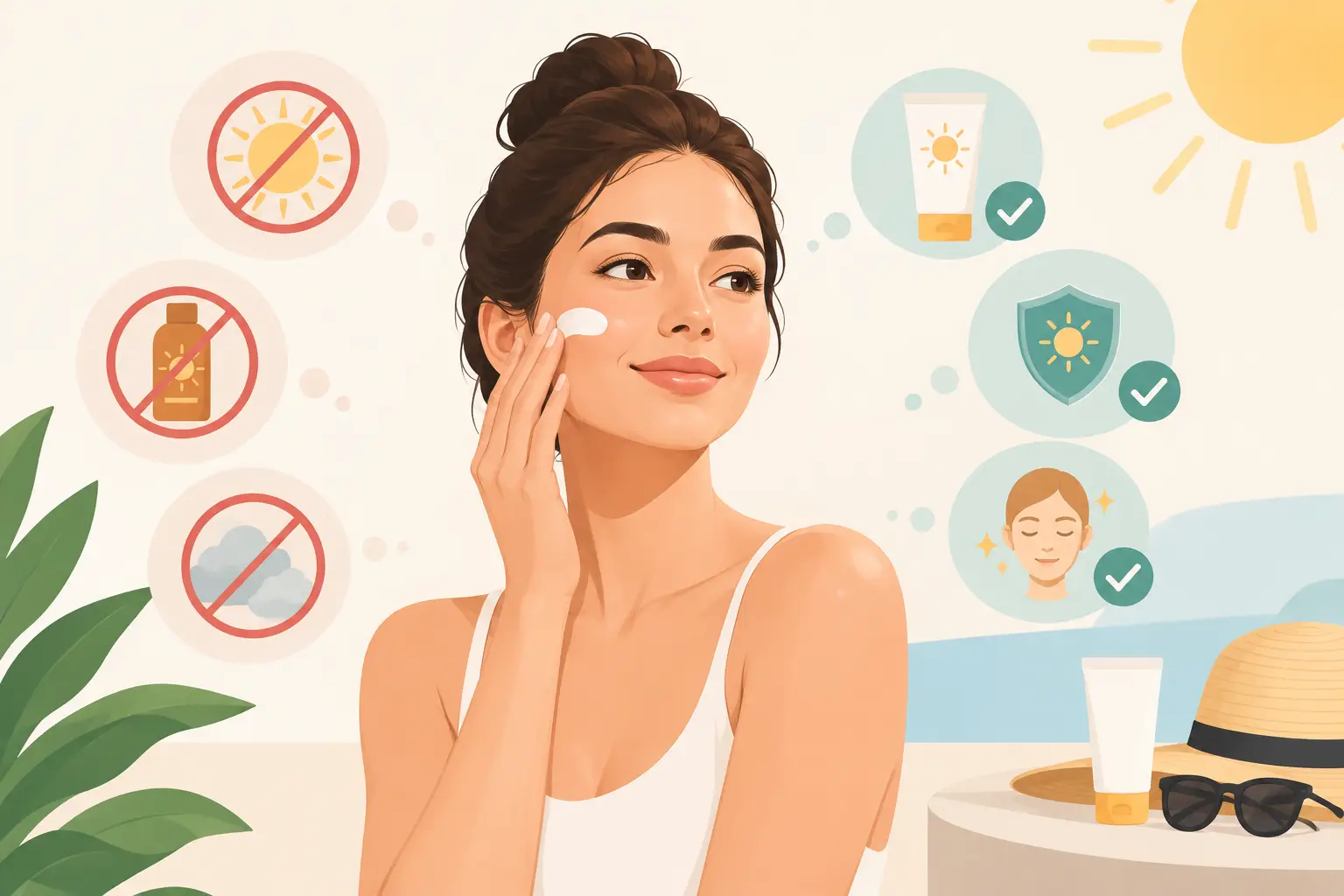
A beautiful complexion can lose its glow long before a visible sunburn appears. Fine lines, uneven tone, stubborn dark spots, and a texture that no longer looks as fresh as it feels are often shaped by years of everyday exposure, not only long afternoons at the beach. That is why sun care myths explained clearly can change more than a summer routine. It can change the way you protect the skin you want to keep luminous.
Sun protection is not about hiding from daylight or sacrificing a polished finish. It is about choosing intelligent, elegant habits that support hydrated, radiant-looking skin through every season. Here is what deserves to be left behind, and what your skin truly needs instead.
Sun Care Myths Explained Without the Guesswork
Myth: I only need sunscreen when it is hot and sunny
The temperature has very little to do with ultraviolet exposure. A bright, cool morning can still bring meaningful UV levels, and cloudy skies do not create a complete shield. Clouds may soften the sunlight you see, but UV rays can still reach your skin.
This is why sunscreen belongs beside your moisturizer, not only beside your swimsuit. Daily protection is especially valuable when you spend time near windows, drive regularly, walk outdoors, or sit in a bright office. Your skin does not need a tropical vacation to encounter the effects of daylight.
A broad-spectrum SPF 30 or higher is a smart everyday baseline for many people. If you love a product that combines moisture, a refined finish, and elevated protection, an SPF 50 formula can make daily consistency feel far more luxurious than complicated.
Myth: A base tan protects my skin
A tan may look like warmth and radiance, but it is the skin’s response to UV exposure. It is not a reliable layer of protection, and it does not replace sunscreen. The idea that you need to tan first to avoid burning is one of the most expensive myths your future complexion can inherit.
If a sun-kissed look is part of your signature style, consider cosmetic color rather than intentional UV exposure. A luminous bronzer, a thoughtfully applied self-tanner, or a warm complexion product can create that golden effect while allowing your skincare routine to stay focused on prevention.
Myth: My makeup with SPF is enough
Makeup with SPF can be a lovely addition, but it is rarely applied in the quantity needed to deliver the protection printed on the label. Most of us use foundation, tinted moisturizer, or concealer in a light veil. That is perfect for a naturally polished complexion, but usually not enough to serve as your only defense against daily UV exposure.
Think of sunscreen as the protective foundation underneath your beauty look. Let it set, then apply makeup as desired. A product such as Dream Cream, created to bring together hydration, soothing care, and SPF 50, can make this step feel more like a beautiful ritual than another layer to manage.
If you spend extended time outdoors, reapplication matters. Makeup can make this feel less convenient, so plan for it: wear a hat, seek shade when possible, and choose a reapplication method that works with your finish. The best option is the one you will actually use generously and consistently.
Myth: Darker skin tones do not need sunscreen
Melanin offers some natural protection, but it does not make anyone immune to UV-related skin damage. Every skin tone can experience uneven pigmentation, premature visible aging, and other consequences of prolonged exposure. For deeper complexions, dark spots can be especially persistent and may be harder to fade than they were to prevent.
Sun protection should never be presented as one narrow version of beauty. It is an act of care for every complexion. The ideal formula is one that feels comfortable, avoids an obvious white cast, layers beautifully, and supports your skin’s individual needs. Texture matters because a product that feels elegant is much more likely to become a daily essential.
Myth: Sitting in the shade means I can skip SPF
Shade is a beautiful strategy, especially at midday, but it is not a complete substitute for sunscreen. Light can reflect from water, sand, pavement, snow, and even nearby buildings. You may also move in and out of direct sun more often than you realize.
Treat shade as one piece of a more considered approach. Pair it with sunglasses that protect the eye area, a wide-brimmed hat when the occasion allows, and sunscreen applied to the face, neck, ears, chest, and hands. These are the areas that often reveal the passing years first, yet they are easy to overlook in a rushed morning.
Myth: One application lasts all day
Even a high SPF is not a once-and-done promise. Sunscreen can wear away through sweat, water, heat, touching your face, clothing, and the simple movement of the day. The right frequency depends on your activity and exposure, but if you are outdoors, swimming, or perspiring, reapply about every two hours and follow the product directions.
On a quieter indoor day, your routine may look different. What matters most is beginning with a sufficient morning application and being honest about your exposure. An afternoon coffee on a sunny terrace, a long drive, or a walk between appointments can add up.
Myth: Higher SPF means I can use less
A higher SPF can offer greater protection, but only when you apply enough product. Using a tiny amount of SPF 50 does not give you the same confidence as applying it properly. For the face and neck, a commonly used guide is roughly two finger lengths of sunscreen, though face size and product texture can vary.
Do not forget the places that quietly receive the most light: the hairline, around the eyes, tops of the ears, neck, décolletage, and backs of the hands. If you wear your hair up or part it differently, your scalp may deserve attention too. These small details are the difference between an occasional product and a truly intentional ritual.
The More Elegant Way to Think About Sun Care
The most effective sun routine is not necessarily the longest one. It is the one that fits beautifully into the life you actually lead. Start with a broad-spectrum sunscreen you enjoy wearing. Apply it as the final step of your morning skincare, before makeup. Add thoughtful physical protection when exposure is high, and reapply when your day calls for it.
There is also room for nuance. Someone working indoors all day may have different needs from someone exercising outside, spending hours by the water, or receiving professional skincare treatments that can make skin more sensitive. If you have a skin condition, are pregnant, use prescription treatments, or have concerns about changing spots on your skin, personalized guidance from a qualified healthcare professional is always wise.
Luxury is often mistaken for excess. In skincare, it can be something more lasting: the confidence of knowing your daily choices are designed to protect what you love about your complexion. Let sun care become the quiet, polished step that makes every other beautiful detail feel even more worth wearing.